
A potential customer opens ChatGPT and types “best web design agency for small businesses in my area” or “who should I hire for local SEO?” Your business does exactly that work. You have happy clients, a solid portfolio, and years of experience. But your name never appears in the response. Instead, the AI recommends three competitors you have never even heard of.
That scenario is playing out for small and mid-sized businesses across every industry right now.
Why AI Answer Engines Are Reshaping Business Discovery
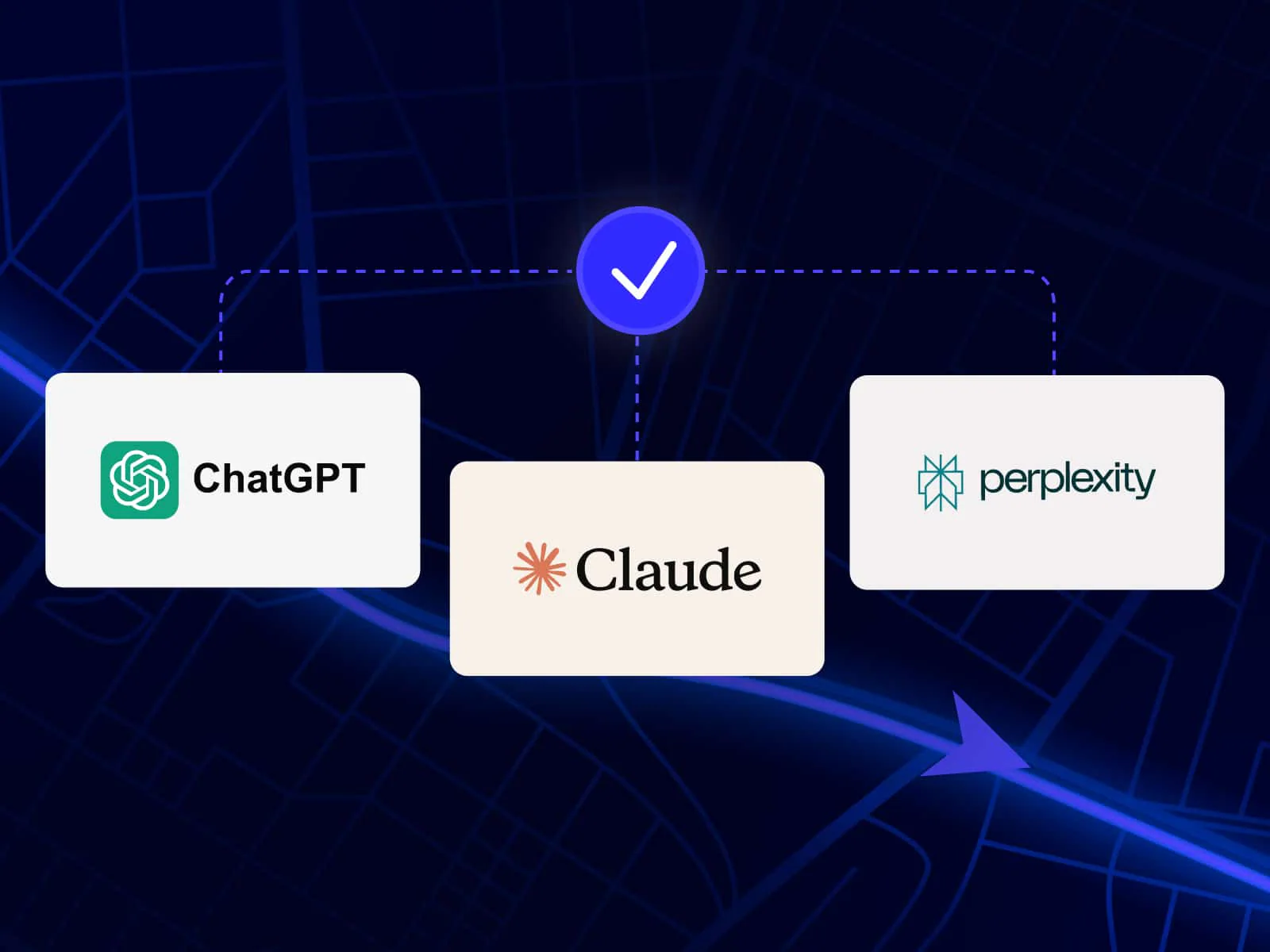
ChatGPT is trained on massive datasets of text from the web, books, and other sources. When browsing is enabled, it can also pull real-time web results to supplement its answers. Claude, built by Anthropic, is similarly trained on large amounts of web content but does not actively browse the internet in its standard mode. Perplexity is the most transparent of the three: it actively searches the web in real time. It cites its sources directly in every response, making it function more like a search engine with a conversational layer on top.
This is fundamentally different from traditional SEO. When someone searches on Google, the goal is to rank on a results page and earn a click. With AI answer engines, the goal shifts. You want to be the source the AI draws from when composing its response. You want to be cited, recommended, or described as an option, often without the user ever clicking through to your site at all. If you are wondering how well your current presence holds up, our breakdown on whether your competitors are showing up on Google is a useful starting point.
Building a Web Presence AI Can Actually Read and Trust
A well-structured website has dedicated service pages, proper heading hierarchy, fast load times, and clean code so both search engines and AI crawlers can parse it.
These are the same technical foundations we focus on in our web design and development work. A site that is built well for human users tends to be built well for machines too, and that overlap is increasingly important.
Beyond your website, consistency matters enormously. AI tools do not just look at one source. They cross-reference multiple signals to verify that a business is real, reputable, and accurately described. That means your business name, address, phone number, and service descriptions need to match across your website, your Google Business Profile, industry directories, and review platforms. Inconsistencies create doubt, and doubt means you are less likely to be cited.
The quality of your written content also plays a significant role. Thin pages with generic boilerplate copy give AI models very little to work with. Original, clearly written content that describes your services in specific terms, speaks to the problems you solve, and reflects genuine expertise gives AI something substantive to reference. This is not about stuffing keywords onto a page. It is about writing content that actually communicates what makes your business worth recommending.
Creating Content That Matches What People Ask AI
Here is something worth sitting with: when someone asks ChatGPT or Perplexity a question, they are not typing in short, choppy keywords the way they might in a Google search bar. They are asking full questions in natural language. “What should I look for when hiring a digital marketing agency?” “Who are the best roofing contractors in Phoenix?” “How do I know if my website needs to be redesigned?”
If your content does not speak that same language, it is much less likely to be drawn into those responses.
The first step is figuring out what questions your ideal customers are actually asking these tools. You can get a sense of this by typing your own service category into ChatGPT or Perplexity and paying attention to the kinds of follow-up questions the interface suggests, or by looking at the “People Also Ask” section in Google search results. These are real questions real people are asking, and they point directly to the content you should be creating.
Once you know the questions, the goal is to answer them clearly and thoroughly. A detailed blog post that walks through how to choose a web design agency, what questions to ask before hiring an SEO firm, or what good branding actually looks like in practice, does double duty. It helps human readers who find it through search, and it gives AI tools a well-reasoned, clearly written source to reference when someone asks that same question conversationally. Our guide on creating evergreen content that generates leads covers this approach in more detail.
There is also a longer-term strategy at work here, which is the concept of topical authority. When your website consistently publishes quality content around a core set of subjects, both search engines and AI models begin to recognize your site as a credible source on those topics. A roofing company that publishes ten detailed, helpful articles about roofing, materials, maintenance, and common problems is signaling depth of expertise. That signal compounds over time.
Earning Mentions, Reviews, and Citations Beyond Your Own Site
AI tools also pull from review platforms, industry directories, news articles, podcasts, and third-party publications. The more places your business is mentioned accurately, the more signal an AI has when deciding whether to recommend you.
Getting listed in reputable industry directories is a practical starting point. These are not just citation signals for traditional SEO; they are additional data points that AI tools use to verify that your business is legitimate and established in its field. Think about the directories and platforms that are genuinely relevant to your industry, and make sure your listing is complete, accurate, and consistent with everything else you have out there. Strengthening your local SEO presence is one of the most effective ways to build this foundation.
Reviews deserve special attention. When someone asks an AI for a recommendation, the tool is often drawing on aggregated reputation signals, and detailed, positive reviews on platforms like Google, Yelp, and industry-specific sites contribute to that picture. Encourage satisfied clients to leave reviews that describe the work you did and the results they experienced. A review that says “great service, highly recommend” is less useful than one that says “Dsquared Media redesigned our website and helped us rank higher for our key services in our local market.” We explore this topic further in our article on how online reviews make or break local business.
Contributing to external publications is another avenue worth pursuing. A guest article in a local business journal, an interview on an industry podcast, or a feature in a regional news outlet creates a third-party reference that carries weight precisely because it did not come from you. These mentions tell AI systems that other credible sources have taken notice of your business, which strengthens your overall authority.
Technical Steps That Give You a Measurable Edge
Structured data, also called schema markup, is the most important of these. Schema is a standardized vocabulary you add to your website’s code that tells search engines and AI crawlers exactly what type of information is on each page. For a local business, LocalBusiness schema communicates your name, address, phone number, hours, and service area in a format that machines can read without ambiguity. FAQ schema on your question-and-answer pages makes it even easier for AI tools to pull specific answers. Organization schema helps establish your business as a recognized entity with a clear identity.
Your sitemap and robots.txt files also matter more than many business owners realize. These files tell crawlers what content exists on your site and what they are allowed to access. If your sitemap is outdated or your robots.txt file is accidentally blocking important pages, AI crawlers may never see the content you have worked hard to create. Running a thorough website audit can help you identify these kinds of technical gaps before they cost you visibility.
It is also worth knowing that tools like Perplexity use their own web crawlers to index content in real time. Checking your server logs periodically can tell you whether these crawlers are visiting your site and whether they are successfully accessing your key pages. This kind of monitoring is more advanced, but it gives you visibility into whether your content is actually being reached.
Finally, if your business has a Google Knowledge Panel, keep it accurate and up to date. Some AI tools reference Google’s structured knowledge sources when generating responses, and an outdated or incomplete panel can undermine the credibility you have built elsewhere. If your business qualifies for a Wikipedia or Wikidata presence, ensuring that information is accurate is similarly worthwhile, since these structured knowledge sources are frequently referenced by large language models.
Your Roadmap to AI Visibility: Where to Start and What to Sustain
If you want a clear picture of what it would take to improve your visibility in AI-generated answers, reach out to us to book a call. We will tell you what is working, what needs attention, and what a practical path forward looks like.